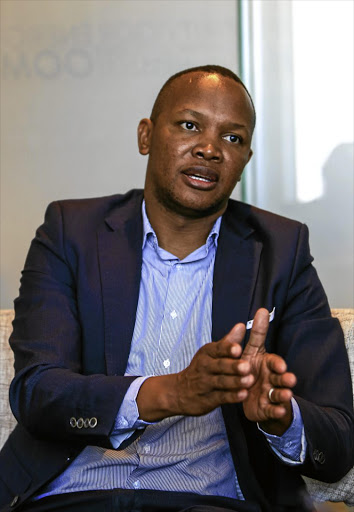
Kenneth Nkosana Makete v Vodacom
Vodacom has decided to take its fight with Nkosana Makate, “inventor” of the “please call me” service, on review to the Constitutional Court.
This comes after the supreme court of appeal on Tuesday rejected an appeal brought by the telecommunications operator against an earlier high court judgment that found it had not offered Makate enough by way of compensation for the service, which an earlier constitutional court judgment had found Makate had invented, despite claims it was actually invented at MTN.
On appeal from – Gauteng Division of the High Court, Pretoria (Hughes J, sitting as court of first instance), Mocumie JA (Mothle JA and Nhlangulela AJA concurring) handed down judgment setting aside the earlier High Court judgment, substituting with the following:
- The decision of the First Respondent delivered on 9 January 2019, determining the compensation to be paid to the Applicant by the Second Respondent, is reviewed and set aside;
- The decision referred to in paragraph 1 is substituted with a decision that the applicant is entitled to be paid 5% – 7.5% of the total revenue of the PCM product from March 2001 to date of judgment by the Second Respondent, together with themora interest thereon, alternatively interest in terms of Section 2A(5) of the Prescribed Rate of Interest Act, 55 of 1975 as amended, and that the total revenue of the PCM product shall be that set out in Model 9A, 9B & 9BB submitted to the First Respondent by the Applicant (Annexure “NM30” – “NM32” to the Supplementary Founding Affidavit); and
- It is directed that first respondent represented by the second respondent shall bear the costs of the negotiations referred to in the Constitutional Court Judgment.
What does this mean for Makete?
In simple terms, the Court ordered the operator’s CEO, Shameel Joosub, to make a new offer to Makete based on the assumption that they had an 18 year contract with him. According to the Judgment, Makete is entitled to be paid between 5 – 7.5% of the total revenue generated by the “Please call me” product over an 18 year period stemming from 2001 to 2019, plus interest. The SCA accordingly gave Vodacom 30 days to come up with a reasonable compensation package for Makete.
What is the background of the case?
Makete, a former Vodacom finance manager at the time, pitched an idea to Vodacom of a method to “buss” someone else’s phone without airtime to one of his superiors in 2000. Vodacom ultimately developed the idea and it was launched under the network in 2001. Although not been involved in the development or launch of the product, Makete was promised compensation for the idea by his manager. Fast-forward to 2024, the issue of compensation is still the core contention in this matter.
Vodacom’s response and the way forward
A part of the SCA ruling key to the process of determining compensation is the Court’s ruling that Vodacom must use the models Makete’s team submitted to calculate the monies owed to Makete.
Using Makete’s model, Makete’s legal team calculated that based on a 5% share of an estimated R205 billion revenue over 18 years equates to R20 billion in compensation. According to reports, this amount is double what Vodacom invests in the form of capital expenditure in its South African network every year and is more than 105 of Vodacom’s entire market capitalisation. Needless to say, the ruling could place huge financial constraints on Vodacom operations once compensation is determined.
Unsurprisingly, Vodacom has indicated that it will take its fight to the Constitutional Court for appeal of the SCA’s judgment. Vodacom insists that the it is “surprised and disappointed with the judgment and will bring an application for leave to appeal before the Constitutional Court of South Africa”. Concerningly from their end is that if their appeal is not upheld, in what court be termed “the Court of Last Resort”, it is highly probable that Vodacom may liable to pay well more than the R47 million they had previously offered to pay Makete as compensation.
When is the right time to settle?
Interestingly, attorneys often find it harder to advise their clients to settle the larger the claim for compensation grows. The economic motivation for both client and attorney often stands as a glare in front of the eyes of success. More often than not the advisor turns to a beneficiary and almost completely ignores the inherent duty of his/her mandate.
Whilst this may not necessarily be the case in the Makete matter, one must take cognisance of the fact that the decisions in this matter are largely influenced by the collective interests of all stakeholders from Attorneys, Advisors, Litigation funders, and ultimately Makete himself. The question those interested in the matter should be asking is what is the right amount to settle one? For Makete he may very well be advised to claim for the highest possible amount, but would the amount be “reasonable” as directed by the Court? What is his limit and what factors would he have to consider: perhaps the length of the trial thus far, Vodacom’s supplementary offer and their willingness to pay, the terms of payment (full or deferred payments) or even his age?
Conversely, Vodacom would undoubtedly have to consider the net-effect of settlement and payment processes. When it’s all said and done, the single most glaring detail in this matter is that commercial agreements ought to be recorded and reduced into writing, and secondly, a breach of a verbal agreement is no less adverse than the breach of a written agreement. the rights of all parties are espoused in contract and are equally protected under the guise of the law.
Image Source: https://mybroadband.co.za/news/wp-content/uploads/2024/02/Vodacom-Please-Call-Me-Kenneth-Nkosana-Makate.jpg
https://www.timeslive.co.za/sunday-times/business/2017-01-29-files-to-find-out-what-vodacom-owes-not-there/